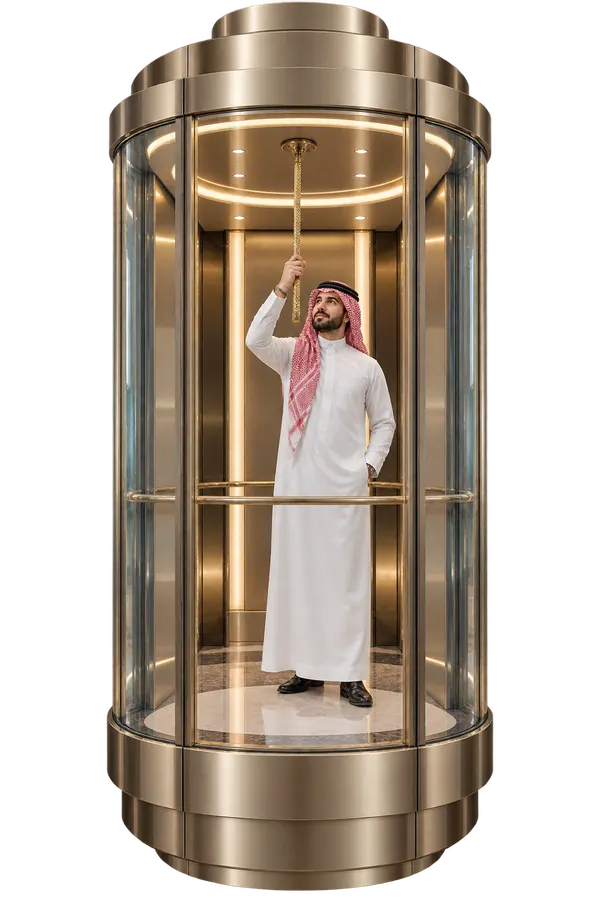
SKYLIFT GUIDE
Elevator Capacity and Passenger Count: How to Choose
Choosing elevator capacity starts with how the building will be used, not just the number of floors. The number of residents or visitors, usage patterns, available space and accessibility needs help the technical team identify suitable options. Request a site survey and written project specifications before agreeing on dimensions or capacity.
What is the difference between load capacity and passenger count?
Load capacity is the rated weight the cabin can carry, expressed in kilograms. Passenger count is the number specified for the elevator. Check both on the elevator plate and observe the permitted limits; available cabin space does not mean the load limit can be exceeded.
How do you assess the building’s needs?
- Is the elevator for a villa, residential building or commercial property? How many people are expected to use it?
- Do users gather at particular times? Is there more than one elevator in the building?
- Will users need wheelchair, stroller or mobility aid access? Discuss the entrance, cabin dimensions and maneuvering space as well as capacity.
- Will the elevator carry luggage or large items? Describe their size, weight and nature so a specialist can assess suitability.
- How many stops are required, and where are the shaft and doors? What space is available?
Approximate figures can start the discussion, but they do not replace a site survey and a design that meets applicable project requirements.
What should a quotation include?
Request a quotation stating the load capacity, passenger count, cabin and door dimensions, number of stops, supply and installation scope, and agreed site preparation. Review site requirements, warranty, maintenance and exclusions. Compare equivalent specifications: differences in capacity or site work can affect the comparison.
Is a larger elevator always better?
Not necessarily. Suitable capacity balances user needs, space, site preparation and cost. Some projects may need a passenger traffic study rather than simply a larger cabin. Discuss the final decision with a qualified specialist.
What is the next step?
Prepare the building type, city, number of stops, intended use and any available drawings. Share them with the team to request a site survey and quotation.